Made in America Again: Factory Towns Roar Back to Life
Tariffs that the experts swore would 'destroy the economy' have done the opposite — bringing jobs home and rebuilding the heartland.
The economic-policy consensus of the past three decades held that tariffs were always bad and free trade was always good, regardless of who the trading partner was. That consensus is over. The voters ended it. The economy did not, despite confident predictions to the contrary, collapse. The reverse occurred.
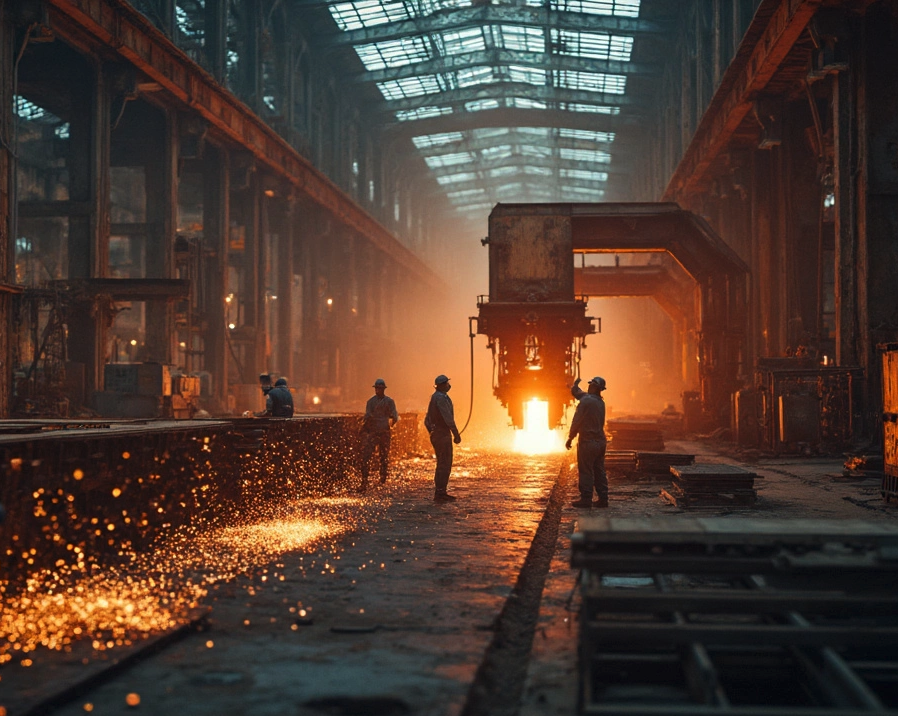
Walk through a town in western Pennsylvania, eastern Ohio, or central Michigan today and the change is visible. Factories that had been on a slow-motion shutdown for two decades are hiring. Industrial parks that the previous economic consensus had treated as zoning archaeology are again under construction. Wages at the bottom of the labor market have firmed.
Why the experts were wrong
The error in the free-trade consensus was treating trade with adversaries as functionally identical to trade with allies. They are not the same. Trade with allies is mutually reinforcing; trade with adversaries subsidizes capacity that may, on a long enough timeline, be turned against you. The China shock of the 2000s eliminated, by mainstream economic estimates, on the order of two million American manufacturing jobs in a decade — concentrated in regions that had no plausible alternative employment.
The political reaction to that was not subtle. It elected a different kind of president in 2016, then again in 2024. The Republican Party that exists today has internalized the lesson; the Democratic Party, more slowly and more reluctantly, is internalizing the same lesson. The free-trade consensus is over. The argument now is over what replaces it.
Trade with allies is mutually reinforcing. Trade with adversaries subsidizes capacity that may, on a long enough timeline, be turned against you.
What the tariffs have done
The tariff regime has done three things at once. First, it has raised the cost of imported manufactured goods enough to change the calculus for domestic producers about whether to expand at home or abroad. Second, it has generated revenue that, against precedent, has actually been collected — tens of billions of dollars that would otherwise have stayed in the bank accounts of foreign producers. Third, it has been a negotiating instrument, used to extract concessions from trading partners who had grown accustomed to the previous American posture of apologetic capitulation.
None of these effects requires permanent tariffs. They require credible tariffs — tariffs that the trading partner believes will be enforced if it does not negotiate a better arrangement. That credibility had been absent for two decades. It is now, conspicuously, present.
The friend-shoring half
The other half of the post-consensus trade policy is friend-shoring — separating supply chains in goods that have national-security implications (semiconductors, pharmaceuticals, rare earths, drone components) while accepting that integration in non-critical consumer goods with allies is mostly fine. This is harder than it sounds because the categories shift; what is non-critical today turns out to be load-bearing tomorrow.
The work of the next three years is to identify the load-bearing categories, build domestic or allied capacity in them, and accept the temporary higher costs as the price of strategic resilience. The free-trade consensus had pretended this calculation did not exist. The current administration is the first in a generation to make the calculation explicitly.
What this means going forward
The towns are coming back. Not all of them, not at the pace any of us would prefer, but the trajectory has reversed for the first time in three decades. The political coalition that produced this reversal is durable because the economic logic is durable. The voters in those towns are not going home. The Republican Party that has aligned itself with their interests will, over the next decade, restructure American economic policy in ways the editorial pages have not yet caught up with. They will.