Patriots Pack Stadiums: The MAGA Movement Is Bigger Than Ever
From Pennsylvania to Arizona, working Americans of every background are showing up for a movement the media still pretends doesn't exist.
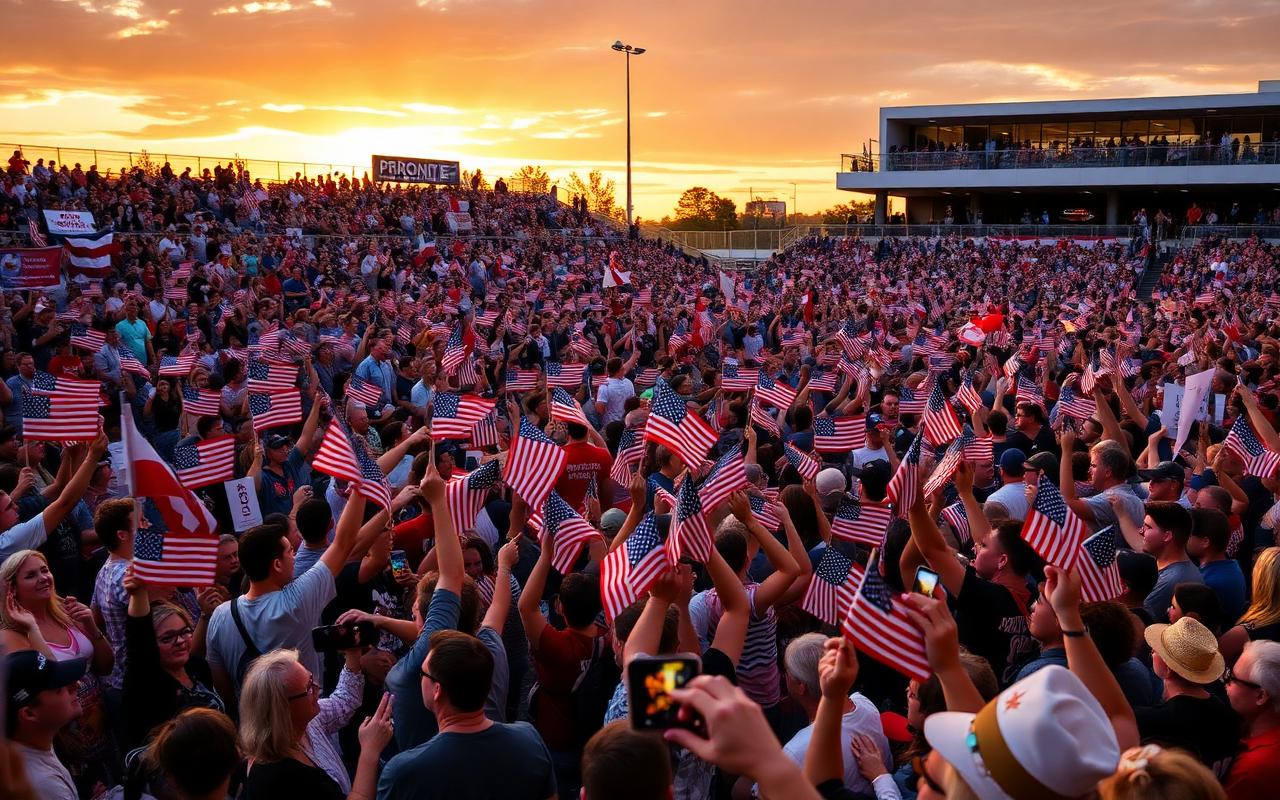
The legacy press has spent ten years predicting that the MAGA coalition was about to collapse. The coalition has, with annoying consistency, declined to collapse. The reason is that the press has been describing a movement that does not exist, while the movement that does exist has been, all along, a different thing.
Visit a rally in 2026. The crowd does not match the description that the legacy press has been distributing. The crowd is younger than reported. It is more racially diverse than reported. It is more female than reported. It is more working-class than reported. It includes a meaningful contingent of Latino voters whose mothers and grandmothers were Democrats. It includes Black men under forty who, ten years ago, the political consensus had treated as a permanently locked-in Democratic constituency.
What the press got wrong
The error in the press's description has been epistemic, not narrative. The press's description of the movement was never an attempt to describe; it was an attempt to defeat. If the movement could be made to look like the residue of a fading demographic, it could be politically managed by waiting it out. The demographic was not, on examination, fading. The demographic was, increasingly, a multiracial working-class majority that the previous Democratic coalition had been quietly losing, and the description was a way of postponing the discovery.
The discovery has now occurred. The 2024 election broke the description. The post-election coalition analyses, the ones written by serious analysts who had to look at the actual returns, have finally caught up to what was visible to anyone who attended a rally. The press's description has not yet caught up, but the press is the trailing indicator on this, not the leading indicator.
The press's description of the movement was never an attempt to describe. It was an attempt to defeat.
What the rallies actually are
The rallies are, structurally, what mass political movements have always looked like in the United States — the temperance movement, the civil-rights movement, the early labor movement. People show up because the movement is, for them, an answer to questions their daily life has been asking and the political establishment has been refusing to engage with.
The questions are not exotic. Why does a year of college cost more than a year of my income. Why is the rent rising faster than my wages. Why is the school my child attends teaching things I do not want my child to be taught. Why is the country I grew up in arranging itself to make my children's life harder than my own. Why is everyone I see on television telling me my life is a problem to be managed rather than a citizenship to be respected.
These questions do not have ideological answers. They have political answers — answers that take seriously the people asking the questions, that propose specific policy responses, and that hold the responses to outcomes-based accountability. The rallies are where the people asking the questions discover, often for the first time, that they are not alone in asking them.
Why the movement outlasts any one figure
The movement outlasts any one figure because the conditions that produced it outlast any one figure. The working-class voters who realigned are not going back to a party that treats their economic concerns as backwardness. The religiously serious voters who realigned are not going back to a party whose activist wing is at war with their institutions. The dissident professionals who realigned are not going back to a party whose elite funder class enforces the orthodoxies they have spent five years escaping.
The successor to the current administration — and there will be one, sooner than the legacy press is prepared for — will inherit the coalition. The voters who showed up will keep showing up. The names on the ballot will change. The movement will continue.